


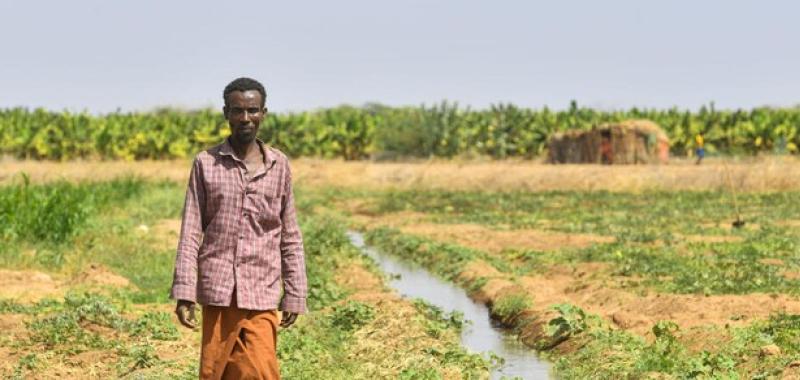
Pastoral and agro-pastoral households in Ethiopia’s Somali Region face recurring drought and shortages of affordable, nutritious livestock feed. Limited access to quality forage seeds, irrigation, suitable production practices and reliable markets restricts year-round fodder availability, reducing livestock productivity, market value and household incomes and increasing vulnerability to climate shocks.
Project overview
The Adadle Resilient Forage Seed and Fodder Hub combines irrigated fodder and forage seed production, livestock fattening and horticulture to improve access to quality livestock feed and support more resilient livelihoods for pastoral and agro-pastoral communities. It aims to increase access to drought-tolerant forage, diversify income opportunities and connect women, youth and smallholder producers to local and cross-border markets.
The challenge
The solution
Led by Dhaqan Livestock Trading and Farming Cooperative, the Adadle Resilient Forage Seed and Fodder Hub uses an integrated, cooperative-led model that combines locally suitable forage production with livestock fattening, horticulture and market linkages. By creating a more reliable supply of nutritious livestock feed and connecting producers to market opportunities, the model aims to support livestock productivity, climate resilience and pastoral and agro-pastoral livelihoods, with potential for replication in other communities.
Results
Dhaqan strengthens pastoralist livelihoods by improving access to reliable fodder, livestock production and markets. Dhaqan currently supports 250 pastoralists through livestock production, fodder and horticulture, managing around 200 livestock, producing 48 belts of Sudan-grass fodder annually and generating ETB 4.5 million in revenue.
Building on this experience, the initiative aims to improve access to locally produced livestock fodder and create more resilient livelihood opportunities in Adadle Woreda, engaging 60 participants to assess locally suitable forage options and market demand. The results will inform a cooperative-led fodder production and marketing model with potential to reach more pastoral and agro-pastoral communities.
Last updated:
02/11/2026