


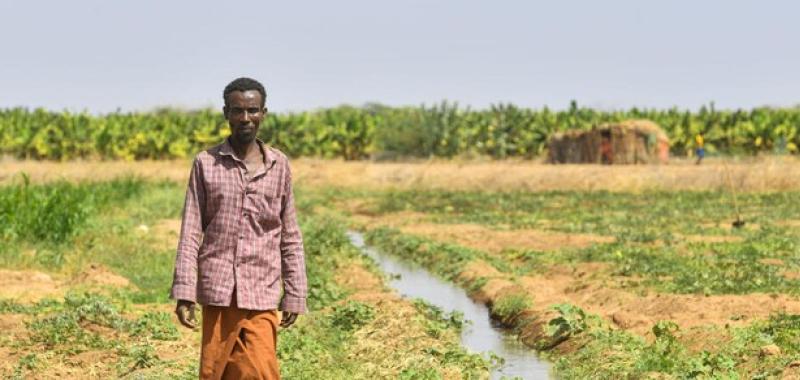
Pastoralists in the Shebelle River Basin face recurring drought, livestock losses and limited access to fodder and veterinary services, undermining their livelihoods and incomes. Dependence on traditional grazing systems and limited livelihood diversification leave pastoralists particularly vulnerable to climate shocks.
Project overview
Dhaqan Cooperative combines irrigated fodder production, livestock fattening and horticulture to improve animal nutrition, strengthen feed supply and connect pastoralists to local and cross-border markets.
The challenge
The solution
Dhaqan Cooperative uses an integrated model combining Sudan-grass fodder cultivation, livestock fattening and horticulture to build a circular local economy around pastoralist livelihoods. Irrigated fodder production provides a more reliable supply of animal feed and supports improved livestock nutrition, while connections to local and cross-border markets create opportunities for producers to sell their products. The cooperative model also supports local ownership and provides a structure that can be replicated in other communities.
Results
Dhaqan strengthens pastoralist livelihoods by improving access to reliable fodder, livestock production and markets. It currently serves 250 pastoralists, manages around 200 livestock, produces 48 belts of Sudan-grass fodder annually and has generated Ethiopian Birr (ETB) 4.5 million in revenue from livestock, fodder and horticulture.
Last updated:
23/10/2026