


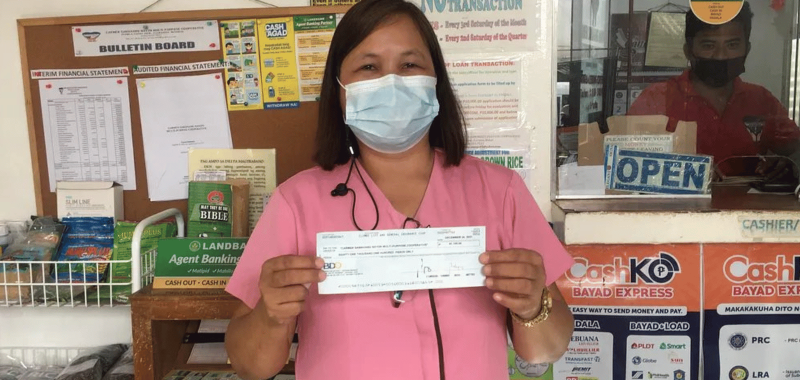
Climate related weather events are on the rise in the Philippines and local communities are increasingly more climate change-vulnerable. Farmers face increasing losses from typhoons, yet access to insurance remains limited. While parametric insurance can provide quick and transparent financial support after disasters, identifying scalable and trusted distribution models remains a key challenge. This is especially true for farming communities in underserved and high-risk regions.
Project overview
IBISA has pioneered operational parametric insurance products for typhoons in the Philippines through its end-to-end climate insurance platform. They design, price and operate climate insurance products using satellite and weather data, enabling rapid and transparent payouts after climate shocks. Currently, they are testing ways to validate scalable micro-level distribution models for parametric typhoon insurance, comparing bundled versus optional delivery methods. They are targeting vulnerable communities and agricultural stakeholders in the Philippines with the goal to enhance their climate resilience.
The Challenge
The Solution
IBISA is trying to provide a solution to finding the best way to distribute parametric typhoon insurance, currently testing two approaches across 7,000 farmers in the Philippines. First, insurance embedded into agricultural credit, and second, insurance offered through cooperative networks. By comparing important metrics such as uptake, operations, and outreach across both models, the project will generate practical insights and evidence on how climate risk protection can be scaled more effectively. Additionally, the company will expand outreach into The Bangsamoro Autonomous Region in Muslim Mindanao (BARMM) and explore a complementary parametric layer that could strengthen broader agricultural risk management systems.
Last updated:
08/10/2026