


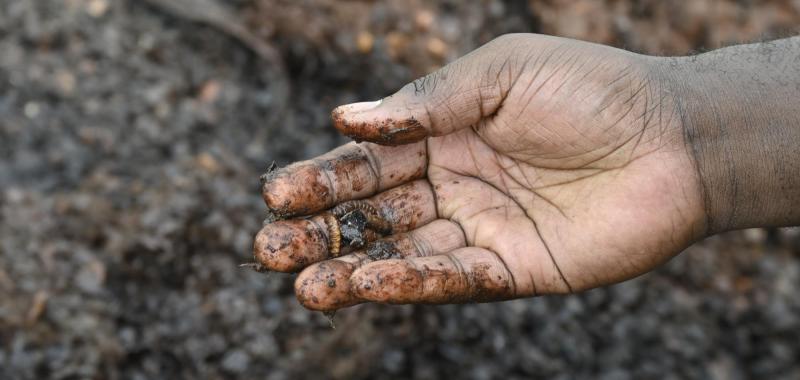
Around 30 percent of global food is wasted each year, including in developing countries like Rwanda where access to post‑harvest facilities is limited. At the same time, widespread food insecurity affects hundreds of millions of people due to challenges such as low productivity and limited affordability. The combined problem of unmanaged organic waste and low soil fertility further restricts smallholder farmers’ productivity and contributes to food insecurity. In many communities, organic waste is discarded rather than reused, while farmers struggle to afford or access quality fertilizers, leading to poor soil health, lower yields, and fragile local food systems.
Challenge
Solution
Rebug2Debug addresses food waste and insecurity by utilizing Black Soldier Fly Larvae to process organic waste into organic fertilizer. This circular solution enhances smallholder farmers' productivity in Rwanda by providing affordable fertilizer, tackling both food insecurity and waste. Thanks to the support of the WFP Innovation Accelerator and WFP Rwanda, Rebug2Debug has collaborated with many agribusiness actors to create sustainable, cost-effective solutions for farmers while improving local food systems.
Impact
Utilizing insect technology, Rebug2Debug’s process of transforming coffee pulp and organic waste into fertilizer is five times faster than conventional composting methods. Further, farmers using Rebug2Debug’s fertilizer increased their yield by 10 percent on average while the production process of the fertilizer prevented the emission of two metric tons of CO2 equivalent per ton of fertilizer produced, contributing to a substantial reduction in greenhouse gas emissions.
Last updated:
19/04/2026