


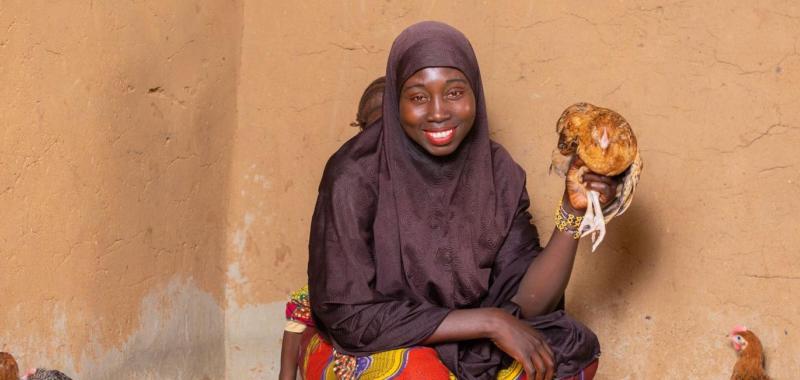
Northern Nigeria has one of the highest rates of child malnutrition on the continent, yet commercial poultry production is concentrated hundreds of kilometres from the communities that need it most. The women best positioned to help close that gap face multiple barriers at once: no capital, restricted mobility, low literacy, no financial history and deep-rooted social norms limiting their economic participation. Existing programmes tend to address these barriers individually. Few remove them simultaneously while building an enterprise that can pay for itself.
Project overview
Babban Gona turns rural women with no capital, experience or financial history into poultry enterprise owners. Each woman receives a complete input package through structured in-kind credit, raises the birds at home and repays through what she produces. The result: independent income and a local supply of protein in communities where neither previously existed.
The challenge
The solution
Babban Gona builds poultry enterprises around the barriers rural women face. The model is a two-tier value chain owned by the women it serves. Rural women begin with a hands-on poultry internship. Graduates become Mother Unit Operators, receiving a full input package as in-kind credit to start a home-based business raising day-old chicks through their critical first five weeks. The best-performing Mother Unit Operators can go on to become community trainers. Poultry Retailers are then financed to purchase five-week-old birds from their local Mother Unit Operator and raise them for meat and eggs, launching a viable home-based enterprise with a clear path to scale.
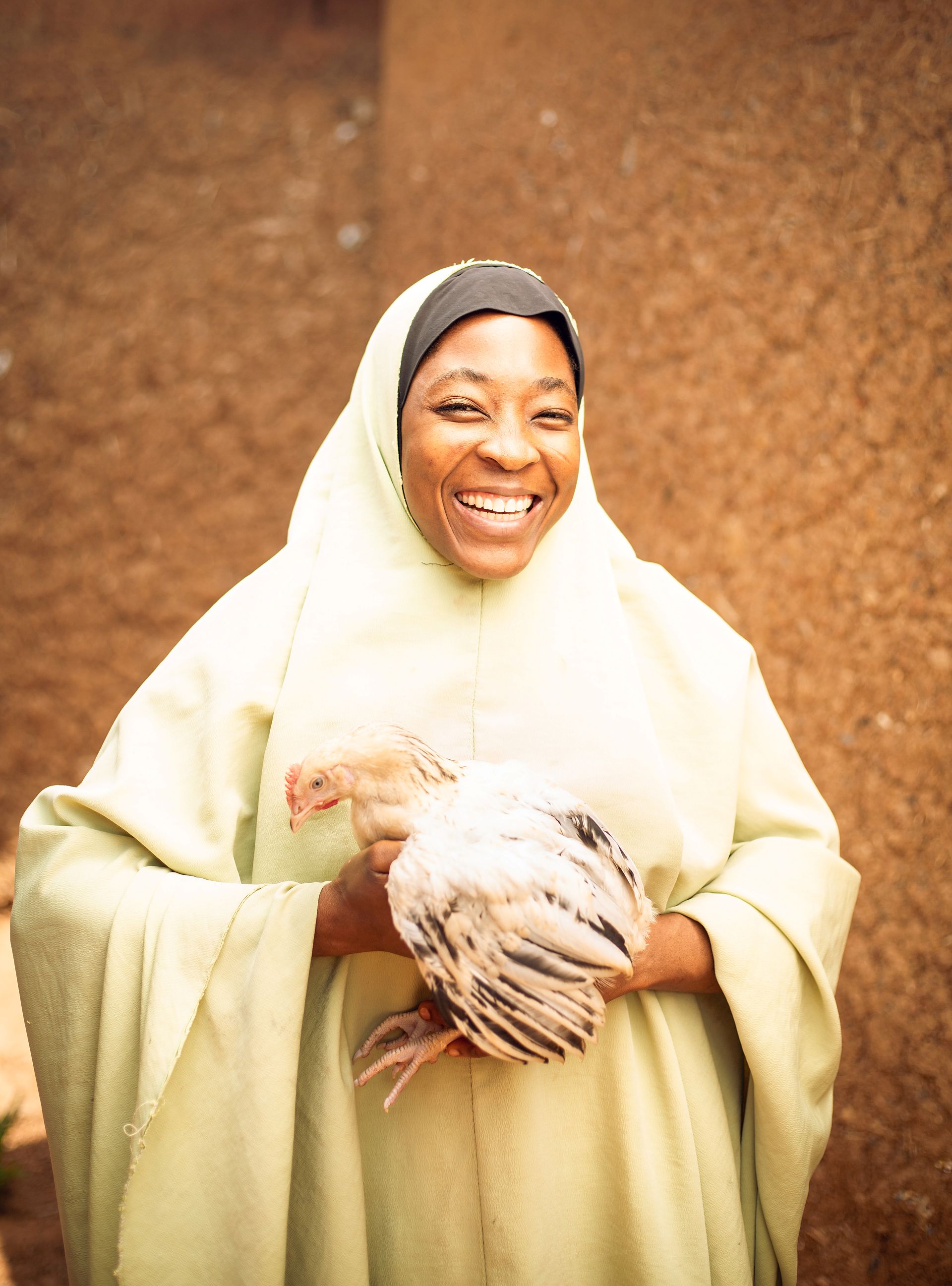
The result is a decentralised, self-reinforcing local value chain in which women are entrepreneurs at every stage. Community referrals and sustained engagement with gatekeepers keep participation socially rooted, while helping shift mindsets at household and community level. What makes the model different is the combination, rather than any single feature. A woman does not have to raise capital, build a credit history, travel to a training centre or secure household permission on her own. The programme meets her where she is and builds a financially viable enterprise around her.
Results
Over 1,000 participants, including Mother Unit Operators and Poultry Retailers, are active across the current operating season, producing 21,500 birds for their communities to date. The programme reports consistent cycle completion, strong repayment, mortality within acceptable thresholds and increased participant incomes.
Demand is self-reinforcing. Babban Gona's established maize programme has lifted smallholder incomes to approximately twice the national average, creating a ready local market for eggs and meat. Women in neighbouring households see the results and seek to join. This combination of consumer demand for the product and demand to participate in the programme drives organic growth at each location.
Last updated:
16/10/2026